A mold problem in State College rarely fixes itself, and WQB Mold Removal is built to handle it start to finish, on your timeline.
Call +1-844-578-1604
Most of our State College technicians spent years in water damage restoration before specializing in mold, so they understand exactly how a small leak turns into a much bigger problem.
Negative-air machines, HEPA scrubbers, moisture meters, and borescopes go out on every State College job, whether it's a closet or a whole basement. Consistency matters more to us than speed — the same checklist gets followed whether it's a routine bathroom job or a full-scale flood response.
Ask around State College and you'll find our name comes up from repeat referrals more than from advertising, and that's exactly how we'd like to keep it.
We'd rather spend an extra twenty minutes on the initial inspection than come back in six months because we rushed the diagnosis the first time.
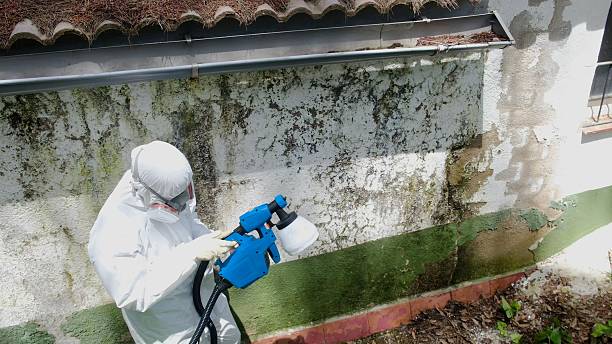
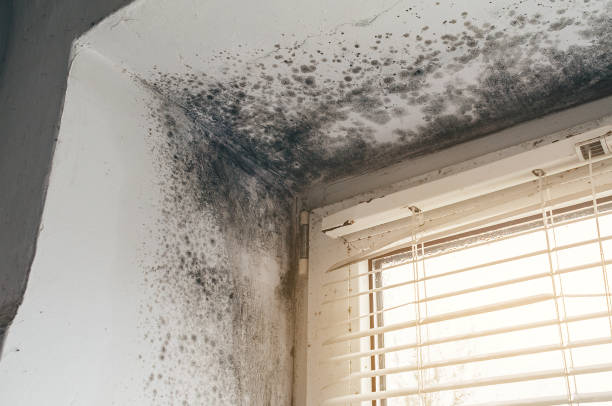
Some mold problems are obvious. Most aren't — here's what usually tips people off.
Candles and sprays mask it for an hour, but a true mold odor comes right back — that's usually the giveaway. It's often strongest near a closet, vent, or crawl space hatch. Air fresheners and candles buy you an afternoon at best before the smell returns.
Water stains — even faded, years-old ones — mean moisture reached somewhere it shouldn't have. Box fans rarely reach moisture trapped in subfloor or wall cavities. We've seen plenty of State College homes where a "fixed" leak from years ago turned out to be the real culprit.
Headaches or congestion that fade on vacation and return the moment you're back in State College point toward indoor air quality. A symptom pattern tied to one specific room is a strong clue. Ruling mold in or out with actual data beats guessing based on symptoms alone.
Staining around an HVAC vent often means condensation is forming inside the ductwork itself. A small visible patch rarely means a small hidden problem. Don't wait for a bigger patch to appear before calling — early inspection is almost always cheaper.
From one bathroom to a flooded crawl space, the response scales to match what's really there.
A burst pipe or roof failure overnight in State College can get a crew dispatched before sunrise. We document everything with photos on arrival, which helps if you're filing an insurance claim. Industrial dehumidifiers and extraction equipment go to work immediately to slow the damage before a new colony ever gets the chance to seed.
Plastic sheeting and negative air pressure keep spores contained to the work area while we treat it. Affected materials are bagged and removed per protocol, not tossed loose. We'll flag any drywall or flooring repair the job needs and connect you with a trusted State College tradesperson if it falls outside our scope.
Our commercial leads coordinate phased containment so parts of the building can stay open. We'll work evenings or weekends when that's what keeps a State College business running. We're comfortable scoping a job across several units at once when a State College, PA property manager needs one point of contact.
Air and surface samples identify the species present before we ever propose a plan. Independent third-party lab analysis keeps the results objective. A written inspection report works for real estate transactions, refinancing, or simple peace of mind about a State College property.
Attic mold often traces back to bath fans venting into the attic instead of outdoors. Encapsulation can be bundled into the same visit to save a second trip. Sump correction and vent placement get addressed at the same time so the fix actually holds.
For chronic humidity, we design a long-term control plan rather than a one-time patch. Some State College, PA clients schedule an annual check, especially in older homes. A modest investment in prevention is almost always cheaper than paying for the same remediation twice.
No vague timelines — here's exactly what a State College job looks like.

Describe what you're seeing and smelling and we'll get a tech on the calendar, often same-day for State College. Let us know roughly when the issue started. If it's urgent, say so — dispatch prioritizes active water and sudden discovery over routine checks.
This step tells us what's actually going on, not a guess. You'll get a plain-language rundown as we go. Photos from the inspection go into your file so you have a record of exactly what we found.
Containment barriers go up first, then affected materials are removed and treated per protocol. Progress updates are available if you're not on-site. Furniture and belongings in the work zone get moved or covered before anything starts.
A clearance test confirms spore counts are back to normal before we call it finished. Any last questions get answered on the spot. You keep a copy of the clearance report for your own records or for a future buyer.
We explain each line item over the phone if you want to walk through it before committing to anything.
Dispatch across State College, PA typically runs same-day for active issues, since we staff enough local techs to avoid a two-week backlog.
You'll walk away with lab results and a written scope, not just our word for it.
If regrowth tied to our workmanship shows up within the warranty period, we return and fix it at no extra charge.
Small State College-area crews like ours live and die by reputation, which keeps us straightforward about scope, pricing, and realistic timelines.

If workmanship-related regrowth shows up within the warranty window at your State College property, we come back and correct it at no additional cost.
Call +1-844-578-1604A few recent stories from State College and nearby neighborhoods.

"Explained every step before touching anything, which I really needed after a stressful week." — Denise R., State College
"Our State College rental had a bad crawl space issue and they sorted it without us relocating tenants." — Marcus T., State College
"Flat-rate pricing meant zero surprises, unlike the last contractor we hired." — Priya S., State College
"Six months out, zero regrowth. Worth it." — Walter H., State College
"Handled our office remediation without shutting the whole building down." — Angela F., State College
"Fair price, clear explanation, zero upsell pressure." — Ray O., State College
WQB Mold Removal dispatches crews throughout State College and the surrounding State College, PA communities. We know the neighborhoods, typical building styles, and HOA quirks that vary block to block rather than treating every address the same.

Proudly serving zip codes in State College, PA including 16802 16803 16801 16804 16805
Answers to what State College homeowners ask us most.

Response time varies by scheduling load, but same-day or next-morning arrival is typical across State College, PA. Weekend and holiday calls still reach a live dispatcher, not voicemail. We'd rather send a tech out today than have you wait a week while the problem spreads further.
We quote the full scope after inspection, and that number holds unless the scope changes. Happy to walk through line items over the phone before you commit. We've heard plenty of horror stories about mid-job upcharges from other State College contractors, and that's exactly what our pricing model is built to avoid.
Emergency dispatch runs 24/7 for situations where a day's delay would make things worse. Emergency visits include temporary containment to slow the spread immediately. A same-night response can make the difference between a contained job and a much larger one.
We pull air or surface samples and send them to an independent lab for species ID and spore counts. Species matters — some call for stricter containment than common surface mildew. Testing before and after the work gives you objective, documented proof of the outcome.
Some policies cover mold tied to a sudden pipe burst but exclude gradual humidity issues. Our photo documentation and written scope are formatted to make claims easier. We've worked with most major carriers in State College, PA and know roughly what documentation they tend to ask for.
A single bathroom or closet is often a one-day job, while a larger crawl space or whole-home job can take three to five days. Drying time after extraction can add a day or two before remediation even starts. Multi-room jobs sometimes get staged so part of the home stays usable while another section is being treated.
For most localized jobs, containment keeps the rest of the home livable. Pets are usually fine in an unaffected part of the home; we'll flag exceptions. Most State College clients are surprised how livable the rest of the house stays during a contained job.
Our containment and air-scrubbing protocols protect the rest of the household during the work. Once clearance testing comes back clean, the space is safe for normal use again. Safety protocols don't change whether the job is in a State College starter home or a larger property.
We fix the moisture source, not just the visible growth — treating symptoms without the cause almost guarantees regrowth. If prior conditions caused a previous remediation to fail, we'll flag that risk upfront. Our warranty covers workmanship-related regrowth specifically, and we'll explain exactly what that means for your job before you sign anything.
Our dispatcher can walk you through what an initial visit covers. Even a phone consult beforehand can help gauge whether a visit is warranted. A quick call is often enough for our team to tell whether what you're describing needs an in-person look right away.
Remediation removes the active colony and fixes the moisture source so conditions no longer support abnormal growth. Any company promising 100% removal is overselling — outdoor and indoor air both carry some spore count. We'd rather explain this clearly upfront than let a State College customer expect something no company can actually deliver.
DIY treatment can mask a problem temporarily, delaying proper remediation while it spreads further. For small, non-porous surfaces a simple cleaning may be fine — anything on drywall, wood, or carpet usually needs a professional look. A quick professional opinion up front often saves State College homeowners money compared to a repeat DIY attempt.